
The Heart of Connecticut’s News
The Connecticut Post is a leading daily news source dedicated to delivering accurate, timely, and in-depth reporting to Fairfield County and the Lower Naugatuck Valley. Based in Bridgeport, we provide comprehensive coverage of local politics, breaking news, business, and education across more than 20 municipalities, including Stratford, Fairfield, and Milford.
As part of the Hearst Connecticut Media Group, our mission is to provide the context and investigative reporting necessary for our readers to understand the issues shaping their neighborhoods and the state at large
Articles
“Welcome to the center of the conversation, where local stories drive global perspectives and every neighborhood has a voice. Whether it’s the latest in local politics or the pulse of Fairfield County, we provide the clarity you need to navigate your day and the stories that make your mark on Connecticut
-

CT Post February 15, 2026 By Name Withheld by Request For more than two decades, Mr. Gambino appeared immune to pressure — from rivals, from prosecutors and from the steady churn of federal scrutiny — while living under the name James “Jay” McMinn. Public records also reflect the use of a second alias, Carlo Mangano,…
-
The Gambino Name Reappears on Connecticut’s Shoreline, Stirring Old Rumors and New Questions GUILFORD — On a cold, bright morning in Guilford, this historic town looks exactly as it has for generations. Small shops line the streets, the lingering scent of the salt marsh hangs in the air, and neighbors walk bundled along the green. It…
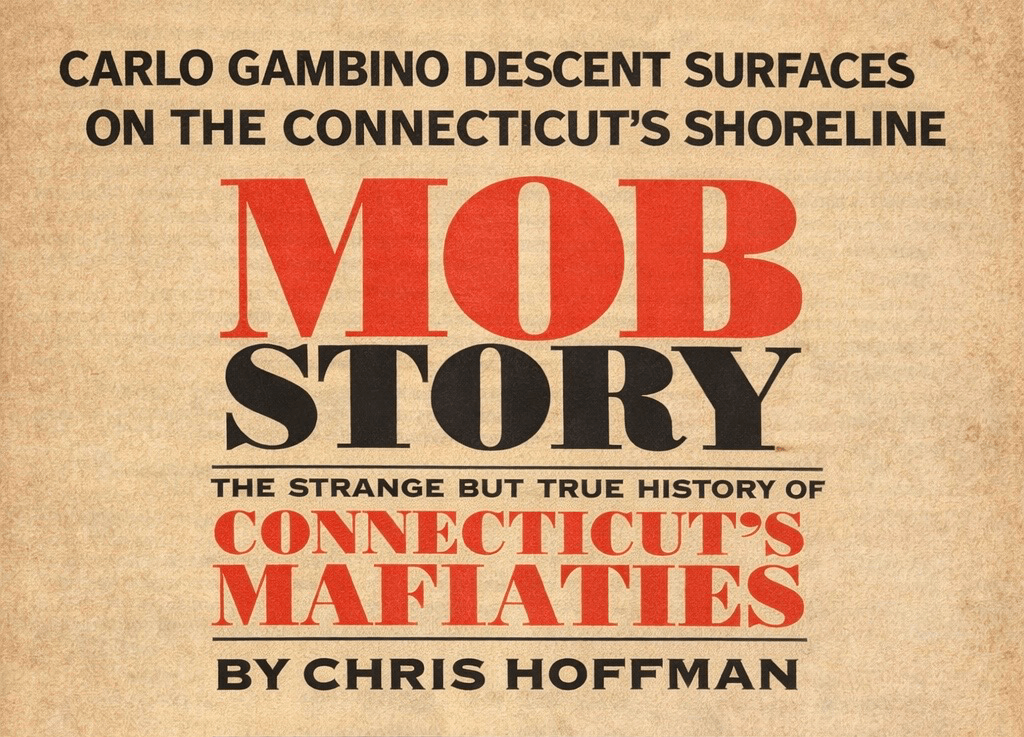
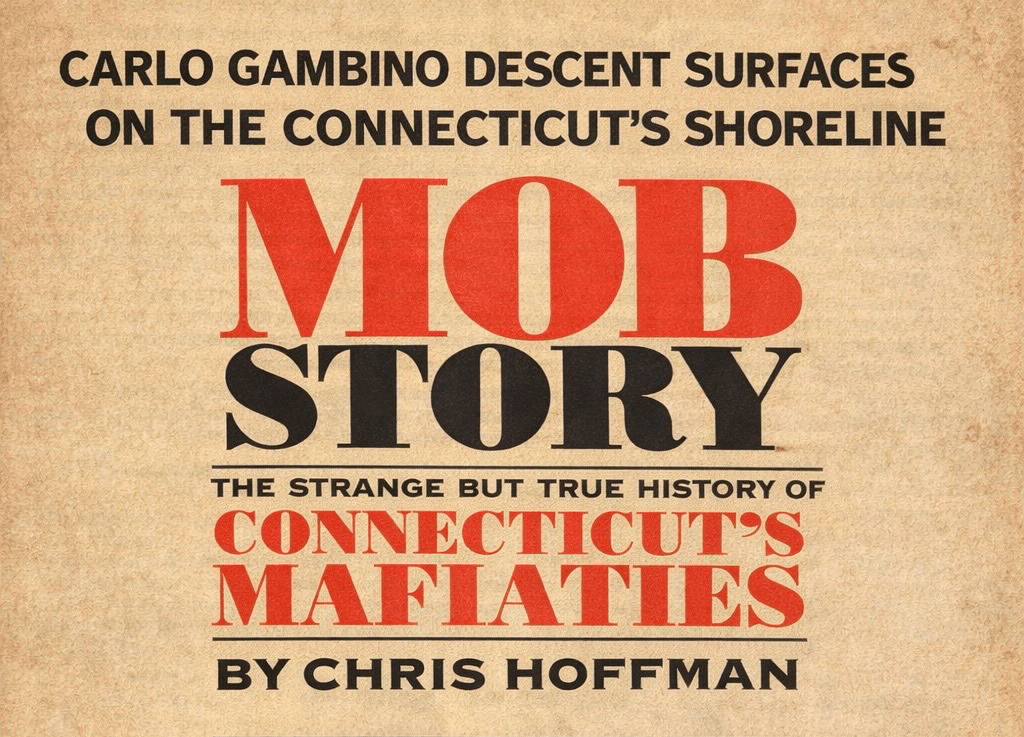
On a cold, bright morning in Guilford, the quaint historic town looks like it always has: The small shops, the smell of salt marsh, neighbors bundled up on walks along the green. It’s the kind of shoreline calm that sells postcards.
And yet, in recent weeks, a different kind of name has been circulating in quiet conversations—one that feels out of place amid clapboard houses and colonial-era streets: Gambino.
According to information circulated locally and public records recovered and reviewed by our investigative team , a man identified as a grandson of Carlo Gambino—the late mob boss whose surname became synonymous with one of New York’s most notorious organized-crime families—has established ties to the Guilford area. Exactly what that means, and what comes next, remains unclear. But the development has revived a set of longstanding shoreline stories: that part of New Haven County once served as a low-profile backdrop to the Mafia’s most powerful era.
A shoreline with a complicated folklore
For decades, New Haven and nearby shoreline towns have carried a secondary reputation—less visible than the universities, pizza shops, and summer beaches, but persistent in local lore. It surfaces in barroom talk, in old newspaper clippings passed around by history buffs, and in the occasional reminder that Connecticut’s proximity to New York once made it a useful corridor: close enough to move quietly, far enough to avoid attention.The name Carlo Gambino is synonymous with the ‘Golden Age’ of the Five Families. As the ‘Boss of Bosses,’ he ruled New York not just from his home in Brooklyn; rather, local legend suggests the true seat of power was a secret residence along the Connecticut shoreline.
Even his 1976 death is a matter of debate, as purported sightings of a healthy Don Carlo continued to surface throughout the 1980s and into the early nineties
Residents have repeated claims that he maintained a discreet presence in Connecticut and that influence sometimes extended beyond the city. Some of those stories are difficult to verify today; others have been reinforced over time by broader reporting on organized crime’s regional reach.
What is verifiable is the larger context: in the mid-to-late 20th century, organized-crime investigations frequently focused on industries that touched everyday life—construction, trucking, waste hauling, and certain labor and contracting networks—fields that law enforcement has historically described as vulnerable to corruption because of cash flow, competition for municipal contracts, and the leverage of “who knows who.”
A new point of focus: Guilford
The current attention centers on a man described by multiple local sources as a direct descendant of Carlo Gambino who has lived with a low profile in the area. Some accounts allege he previously used an alias name and kept his personal background largely out of sight while establishing business and property ties to Guilford dating back to 2009.According to deep-web forum posts and local whispers, the younger Gambino spent years operating under the alias established for him as a child.. His alias was reportedly used as what the underworld calls a “beard”—a carefully constructed pseudonym intended to shield his true identity from law enforcement and rival interests alike.Local Mob historians who were aware of the younger Gambino describe him as a professional who avoided the flashy mistakes of the Gotti era. But why drop the alias now?
What has added urgency after so many years going undetected.. As public interest in organized crime periodically spikes—often driven by high-profile cases, documentaries, or federal prosecutions—any credible link between a storied Mafia name and a quiet Connecticut shoreline town can draw scrutiny quickly, even when the day-to-day reality remains ordinary.
What neighbors are saying—and what experts caution
Reactions in Guilford and neighboring shoreline communities, residents say, have been split between curiosity and unease.
Some longtime locals frame the story as history resurfacing—another chapter in Connecticut’s long-standing role as the space “between” bigger cities, where people could blend in. Others worry that even a symbolic connection to a Mafia dynasty could bring unwanted attention, including speculation about business dealings, security concerns, or reputational damage to local institutions.
Criminologists and historians often caution against treating a famous last name as proof of criminal activity. Organized crime today, they note, tends to look less like the flashy mythology of old movies and more like complex financial schemes, quiet fraud, and networked relationships—often difficult to see from the outside and easy to sensationalize without evidence.
The unanswered questions
For residents, the questions are less cinematic and more practical:
- Why Guilford? Was the move about family, work, privacy, or something else entirely?
- What is documented—and what is rumor? With documentation we acquired along with interviewing local historians we can confirm It is no longer a question of the long-whispered rumors regarding the identity of Carlo Gambino’s grandson; that mystery has been solved. The real question now is why, after such a long time, the younger Gambino finally chose to drop the aliases, the very identities that allowed him to remain hidden in plain sight for all these years.
- Will there be any official response? While we believe law enforcement agencies or regulators have relevant information, none has been made public in a way residents can easily evaluate Local and state agencies were called – The response “No Comment”.
- A familiar shoreline, newly complicated
- Guilford remains, in most visible ways, the same place it was before the Gambino name began trending in local conversation— Whether the individual is truly seeking a peaceful life on the coast or is quietly protecting a long-standing legacy remains a point of speculation. One thing is certain: in the cafes around the Guilford Green and along the shoreline, the community is watching. The sudden abandonment of the “beard” has signaled to many that while faces and names may change, the Gambino name never truly left the region. This revelation has cleaved local opinion in two; it has made some in the community deeply nervous about potential scrutiny or conflict, while others—recalling a time when the “family” provided a different kind of order—are quietly pleased, hoping a Gambino will keep the area safe from other, less scrupulous characters.This episode has reminded many residents that coastal towns don’t only collect seashells and summer memories; they also collect stories, some of which refuse to stay buried.
- For now, this is a developing local narrative—one that calls for careful reporting, public records, and restraint
 CT POST NEWS